

Introduction
When soil cannot be naturally reinforced, but a structure must remain stable, soil nails or anchors may be the solution. This type of reinforcement can sometimes replace traditional foundations, even for tall or heavy structures.
In this guide, we will cover:
- Causes of soil instability
- Methods and materials for soil reinforcement
- Consequences of improper soil treatment
- Popular technologies and suppliers
- Rough price ranges for materials from China
- How self-drilling anchors (SDA, bored injection anchors) are used in soil nailing projects
Causes of Soil Instability
Soil instability can threaten buildings, roads, and infrastructure. Common causes include:
- Soil Moisture: Overwatered soil or heavy rainfall reduces stability.
- Seasonal Changes: Winter thawing and summer drying cause expansion and contraction.
- Soil Shift: Loads or tilting of soil can destabilize foundations and structures.
Consequences of Unstable Soils
If soils are not properly reinforced, the following can occur:
- Collapse of structures: Buildings may fail.
- Flooding: Water may penetrate and damage premises.
- Soil Loss: Erosion can reduce soil mass, threatening stability.
Soil Strengthening Methods
Several techniques are used to strengthen weak soils. These include:
1. Geotextiles and Geonets
- Used to stabilize soil masses
- Improve soil structure and strength
2. Ground Anchors and Piles
- Provide additional support
- Prevent soil shifting and collapse
3. Soil Waterproofing
- Protects soil from water infiltration
- Maintains soil stability
4. Injection, Thermal, and Chemical Methods
- Inject specialized materials into weak soils or voids
- Harden soil or material to increase strength
Materials and Technologies for Soil Strengthening

Common materials:
- Geosynthetics
- Reinforcing structures
- Waterproofing composites
Popular reinforcement methods:
- Cementation: Inject cement to strengthen weak soils.
- Silicification: Use silicate solutions to form stable bonds.
- Resinization: Introduce resins that harden in soil.
- Claying: Add clay to improve plasticity and water retention.
- Bituminization: Use bitumen for waterproofing and soil strength.
- Jet Grouting: Inject high-pressure cement slurry to create support columns.
Each method is selected based on project requirements and soil characteristics. A proper soil survey is essential.
Application of Soil Reinforcement
Soil stabilization is essential for houses, roads, bridges, and other infrastructure.
Introduction to Soil Nailing
Soil nails are drilled into strong soil layers using specialized equipment. They provide tension and compression resistance, transferring loads from slopes, retaining walls, or foundations to stronger soil layers.
Types and Classifications
- Service Life: Temporary or permanent anchors. Permanent anchors are corrosion-protected and designed to last the life of the structure.
- Direction of Traction: Vertical or inclined.
- Drilling Method: Driven, vibratory, or drilled (auger or clay solution).
- Embedding Method: Rod, injection, strand, cylindrical.
- Tension Type: With tension, without tension, or pre-tensioned.
Components and Materials
- Head: Transfers load forces to the anchor rod.
- Anchor Rod: Transfers pullout forces from the head to the root.
- Root: Embedded part in the soil.
- Materials: Reinforcing bars, tubular steel, or steel strands; SDA can also be used as soil nails.

Advantages
- High load-bearing capacity suitable for tall or heavy structures.
- Eliminates the need for concrete foundations or adding soil weight.
- Faster and often more cost-effective than pile installation.
- Ready for use immediately after installation and static testing.
- Environmentally friendly and reduces excavation impact.
Installation Process
- Drill wells to the required depth.
- Lower the reinforcement bar while introducing flushing fluid to clean the borehole.
- Complete drilling at design depth.
- Pump cement slurry to fill the borehole.
- The anchor functions as a reinforcing element within the cement-filled soil.
Popular Solution Providers and Material Manufacturers
- DYWIDAG: Comprehensive soil reinforcement solutions—global leader in the geotechnical reinforcement field.
- Geoquest – Offers reinforced earth solutions, soil nails, ground anchors (TerraAnchor, TerraNail), and engineered geosynthetics for soil stabilization.
- Maccaferri – Italian multinational specializing in soil reinforcement, retaining structures, erosion control, and slope stabilization products.
- Macalloy – UK‑based manufacturer of tension bar systems and ground anchor components used worldwide in civil engineering and reinforced structures.
- Ischebeck TITAN GE – Provides soil nails, hollow bars, injection anchors, micropiles, and geotechnical solutions for global construction projects.
- Platipus Anchors – United States manufacturer of earth anchors, soil anchors, tieback systems, and slope stabilization products.
- Intech Anchoring Systems – U.S. producer of soil anchors, tieback anchors, soldier piles, and related geostructural products.
- Williams Form (US): Major manufacturer with proven designs and standards.
- Exactus Engineering – Provides engineered ground anchors, piles, and foundation reinforcement systems tailored to site conditions.
- Schnabel (Geotechnical Solutions) – Major geotechnical contractor and supplier in the U.S. with soil nailing, tiebacks, and earth retention expertise.
- GeoStabilization International (GSI) – North American specialist in soil‑nail walls, anchors, tiebacks, shotcrete facing, and permanent shoring systems.
Prices for Materials in China

*Prices are for reference only due to steel market fluctuations. Contact us for the latest quote.
- Standard SDA (25–32 mm, 3–6 m): $10–$25 per anchor
- Larger SDA (38–76 mm, 3–4 m): $25–$60 per anchor
- Specialty SDA (stainless steel, HDG, or coated): $50+ per anchor
- Accessories: Vary by model, coating, and quantity
Quality and reliability should be prioritized when sourcing bulk materials. Rayon has experience supplying mass products to international companies and improving competitiveness with new-generation machinery.
Conclusion
Proper soil reinforcement prevents structural failures, flooding, and erosion. Using modern materials and techniques ensures safe, reliable, and cost-effective construction.
 https://i0.wp.com/rayonsda.com/wp-content/uploads/2026/10/Self-Drilling-Anchor-Hollow-Bar-System.webp?fit=1000%2C800&ssl=1
800
1000
RY
https://rayonsda.com/wp-content/uploads/2026/03/Rayon-Logo-300x138.png
RY2026-10-19 06:36:452026-10-20 02:13:02Self Drilling Anchor HOLLOW BAR System
https://i0.wp.com/rayonsda.com/wp-content/uploads/2026/10/Self-Drilling-Anchor-Hollow-Bar-System.webp?fit=1000%2C800&ssl=1
800
1000
RY
https://rayonsda.com/wp-content/uploads/2026/03/Rayon-Logo-300x138.png
RY2026-10-19 06:36:452026-10-20 02:13:02Self Drilling Anchor HOLLOW BAR System https://i0.wp.com/rayonsda.com/wp-content/uploads/2026/09/ground-anchor-cover.webp?fit=1000%2C800&ssl=1
800
1000
RY
https://rayonsda.com/wp-content/uploads/2026/03/Rayon-Logo-300x138.png
RY2026-09-09 06:19:592026-09-09 06:20:02Ground Anchor Types and Installation Technologies
https://i0.wp.com/rayonsda.com/wp-content/uploads/2026/09/ground-anchor-cover.webp?fit=1000%2C800&ssl=1
800
1000
RY
https://rayonsda.com/wp-content/uploads/2026/03/Rayon-Logo-300x138.png
RY2026-09-09 06:19:592026-09-09 06:20:02Ground Anchor Types and Installation Technologies https://i0.wp.com/rayonsda.com/wp-content/uploads/2026/07/natm_tunnel_cover.webp?fit=1000%2C800&ssl=1
800
1000
RY
https://rayonsda.com/wp-content/uploads/2026/03/Rayon-Logo-300x138.png
RY2026-07-20 03:33:432026-07-20 03:33:45How the New Austrian Tunnelling Method Changed Underground Construction — And Why Self-Drilling Anchors Matter
https://i0.wp.com/rayonsda.com/wp-content/uploads/2026/07/natm_tunnel_cover.webp?fit=1000%2C800&ssl=1
800
1000
RY
https://rayonsda.com/wp-content/uploads/2026/03/Rayon-Logo-300x138.png
RY2026-07-20 03:33:432026-07-20 03:33:45How the New Austrian Tunnelling Method Changed Underground Construction — And Why Self-Drilling Anchors Matter https://i0.wp.com/rayonsda.com/wp-content/uploads/2026/06/galvanized_anchor_cover.webp?fit=1000%2C800&ssl=1
800
1000
RY
https://rayonsda.com/wp-content/uploads/2026/03/Rayon-Logo-300x138.png
RY2026-06-30 06:56:502026-06-30 06:56:52
https://i0.wp.com/rayonsda.com/wp-content/uploads/2026/06/galvanized_anchor_cover.webp?fit=1000%2C800&ssl=1
800
1000
RY
https://rayonsda.com/wp-content/uploads/2026/03/Rayon-Logo-300x138.png
RY2026-06-30 06:56:502026-06-30 06:56:52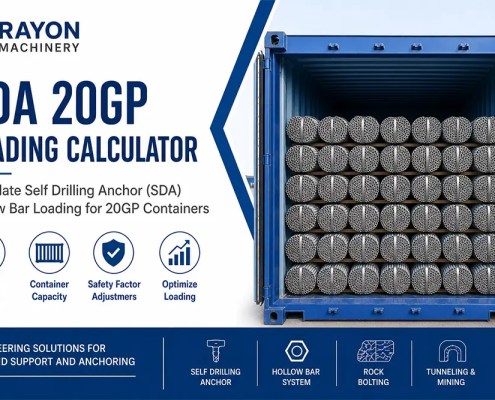 https://i0.wp.com/rayonsda.com/wp-content/uploads/2026/06/SDA-Container-Loading.webp?fit=1000%2C667&ssl=1
667
1000
RY
https://rayonsda.com/wp-content/uploads/2026/03/Rayon-Logo-300x138.png
RY2026-06-01 06:59:172026-09-03 07:32:10Self Drilling Anchor Container Loading Guide (20GP Calculation Method)
https://i0.wp.com/rayonsda.com/wp-content/uploads/2026/06/SDA-Container-Loading.webp?fit=1000%2C667&ssl=1
667
1000
RY
https://rayonsda.com/wp-content/uploads/2026/03/Rayon-Logo-300x138.png
RY2026-06-01 06:59:172026-09-03 07:32:10Self Drilling Anchor Container Loading Guide (20GP Calculation Method) https://i0.wp.com/rayonsda.com/wp-content/uploads/2026/05/Prestressed-Anchors.webp?fit=1000%2C800&ssl=1
800
1000
RY
https://rayonsda.com/wp-content/uploads/2026/03/Rayon-Logo-300x138.png
RY2026-05-21 01:34:102026-05-21 01:34:12Prestressed Anchors and Gravity Walls in Action
https://i0.wp.com/rayonsda.com/wp-content/uploads/2026/05/Prestressed-Anchors.webp?fit=1000%2C800&ssl=1
800
1000
RY
https://rayonsda.com/wp-content/uploads/2026/03/Rayon-Logo-300x138.png
RY2026-05-21 01:34:102026-05-21 01:34:12Prestressed Anchors and Gravity Walls in Action https://i0.wp.com/rayonsda.com/wp-content/uploads/2026/05/Tunneling-IN-vs-CN.webp?fit=1000%2C800&ssl=1
800
1000
RY
https://rayonsda.com/wp-content/uploads/2026/03/Rayon-Logo-300x138.png
RY2026-05-13 01:21:352026-05-13 01:21:37Engineering Underground: How China and India Conquer Mountain Tunnels
https://i0.wp.com/rayonsda.com/wp-content/uploads/2026/05/Tunneling-IN-vs-CN.webp?fit=1000%2C800&ssl=1
800
1000
RY
https://rayonsda.com/wp-content/uploads/2026/03/Rayon-Logo-300x138.png
RY2026-05-13 01:21:352026-05-13 01:21:37Engineering Underground: How China and India Conquer Mountain Tunnels https://i0.wp.com/rayonsda.com/wp-content/uploads/2026/05/world_cup_micropile_cover.webp?fit=1000%2C800&ssl=1
800
1000
RY
https://rayonsda.com/wp-content/uploads/2026/03/Rayon-Logo-300x138.png
RY2026-05-07 05:38:402026-05-07 05:40:45Upgrading Existing Infrastructure for the 2026 World Cup: Where Self-Drilling Micropiles Make Sense
https://i0.wp.com/rayonsda.com/wp-content/uploads/2026/05/world_cup_micropile_cover.webp?fit=1000%2C800&ssl=1
800
1000
RY
https://rayonsda.com/wp-content/uploads/2026/03/Rayon-Logo-300x138.png
RY2026-05-07 05:38:402026-05-07 05:40:45Upgrading Existing Infrastructure for the 2026 World Cup: Where Self-Drilling Micropiles Make Sense https://i0.wp.com/rayonsda.com/wp-content/uploads/2026/04/Threads-you-should-know.webp?fit=1000%2C799&ssl=1
799
1000
RY
https://rayonsda.com/wp-content/uploads/2026/03/Rayon-Logo-300x138.png
RY2026-04-28 07:05:232026-05-07 05:42:55Threads in SDA Couplers and Nuts: Types, Standards, and Precision
https://i0.wp.com/rayonsda.com/wp-content/uploads/2026/04/Threads-you-should-know.webp?fit=1000%2C799&ssl=1
799
1000
RY
https://rayonsda.com/wp-content/uploads/2026/03/Rayon-Logo-300x138.png
RY2026-04-28 07:05:232026-05-07 05:42:55Threads in SDA Couplers and Nuts: Types, Standards, and Precision