

In the production of couplers and nuts for self-drilling anchors (SDA), threads are critical components that determine the performance and reliability of ground anchors.
Every day, our production team works with threads on CNC machines, ensuring precise machining to meet strict tolerances. Even a minor deviation—whether too shallow or too deep—can compromise the stability of the entire reinforcing system.
Interestingly, threads are not as simple as they seem. The number of types and standards is vast, and understanding the differences is crucial for SDA manufacturing.
This article provides a clear overview of basic thread types, profiles, and precision levels.
What is a Thread?
A thread is an alternating series of ridges and grooves on the surface of a rotating body, formed along a helical line. Threads can be:
- External threads – such as on bars
- Internal threads – such as in couplers and nuts

Threads can also be classified by the shape of their profile:
- Round threads
- Trapezoidal threads
- Conical threads
While these shapes are easy to distinguish visually, producing them correctly requires precision and careful control.
Thread Profiles
The thread profile is the most important characteristic, determining both the design and the application. Profiles are generally classified as:
- Standard profiles – comply with international standards
- Non-standard profiles – used for specialized applications
Key parameters that differentiate thread profiles include pitch (P), profile angle, major and minor diameters, and sometimes the root shape.

Thread Profiles
Common Thread Types & Standards
Threads used in Self Drilling Anchors (SDA), couplers, and nuts must follow international standards to ensure interchangeability. strength, and reliability in ground anchoring applications.
RAYON’S COMMITMENT
Our SDA rods, couplers, and nuts comply with key international standards used in the rock drilling and ground anchor industry:
- ISO 10208:1996
- ISO 1720:1974
We ensure consistent thread quality for safe and reliable anchoring performance.
Standard Thread Profiles
- Metric threads – Specified by pitch and featuring a 60° equilateral thread profile.

Metric threads
- Pipe threads – Include Pipe Parallel (BSPP / MJ) and Pipe Tapered (BSPT / NPT / ISO 7-1), primarily used for sealing.

Pipe Parallel

Pipe Tapered
- Round threads – Often used for high fatigue applications.
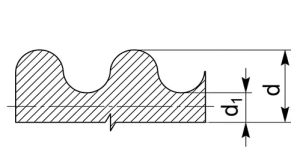
Round threads
- Trapezoidal threads – Suitable for power or translational threads.

Trapezoidal threads
- Continuous threads – Threads running along the full length of the part.

Continuous threads
- ISO Standard threads – For example, ISO 10208:1996 and ISO 1720:1974, used in SDA couplers and nuts for ground anchors.
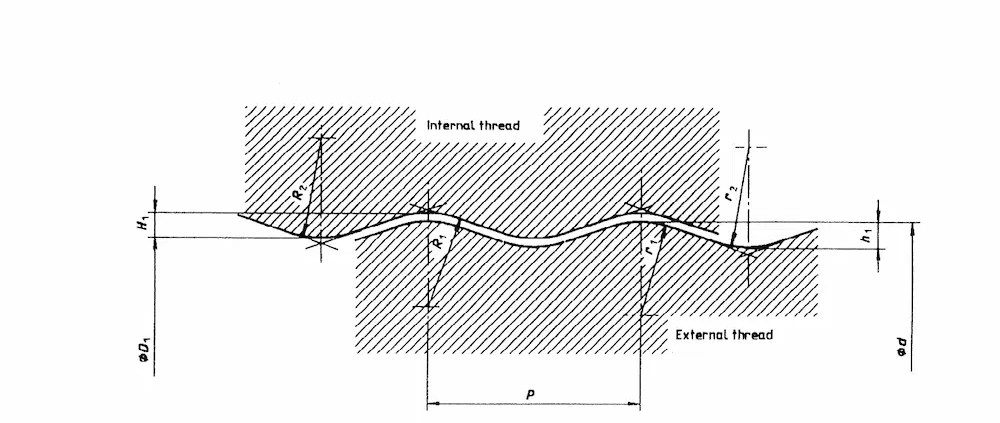
ISO 10208 Thread
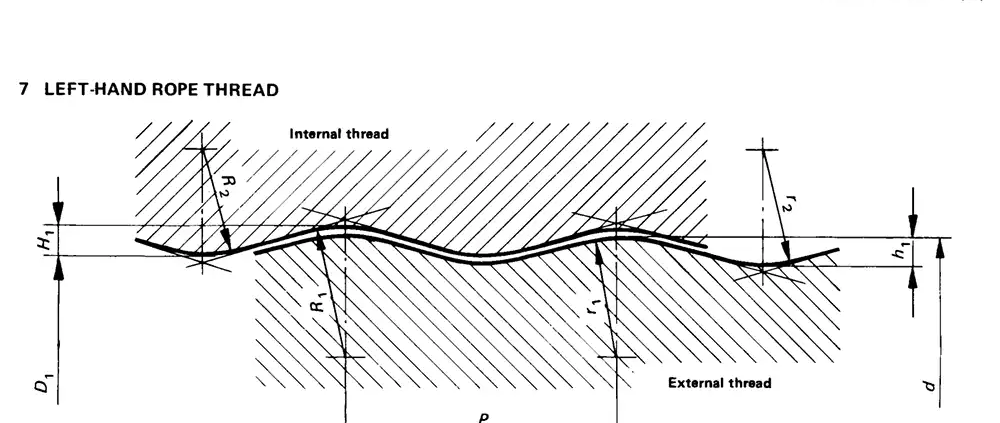
ISO 1720 Thread
- Non-standard threads include rectangular threads, which do not have an international standard.

Rectangular threads
Thread Direction
Threads can be right-hand or left-hand, depending on the required rotation and application. Left-hand threads are sometimes used in SDA couplers to prevent loosening under specific loading conditions.
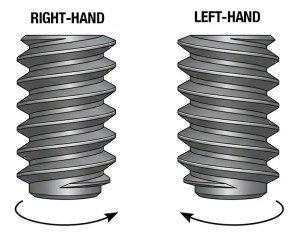
Thread Direction
Thread Precision
Thread accuracy affects fit, strength, and function. Generally, threads are classified into three accuracy levels:
High-precision threads – ISO Metric, UN / UNJ, aerospace applications
- Strict thread profile, minimal allowable tolerance
- Used for fasteners, power transmission, and precision machinery
Medium-precision threads – Trapezoidal, ACME, Buttress
- Larger tolerances allowed
- Thread profile is robust, designed for power screws and heavy-load transmission
Low-precision threads – Pipe threads (BSP, NPT, MJ, ISO 10208)
- Primarily used for sealing, not for precision power transmission
- Looser tolerances are acceptable, thread profile allows slight flexibility
Why So Many Thread Standards?
Different industries and applications have unique requirements:
Understanding the right thread standard is essential to ensure the safety and reliability of Self Drilling Anchor, coupler, nut, and ground anchor systems.
Conclusion
In SDA manufacturing, proper threading is critical. High-quality threads on couplers and nuts ensure the performance of self drilling anchors and the stability of the ground anchor system. Understanding thread types, standards, and precision levels helps guarantee safe and effective soil reinforcement solutions.
More Articles
 https://i0.wp.com/rayonsda.com/wp-content/uploads/2026/10/Self-Drilling-Anchor-Hollow-Bar-System.webp?fit=1000%2C800&ssl=1
800
1000
RY
https://rayonsda.com/wp-content/uploads/2026/03/Rayon-Logo-300x138.png
RY2026-10-19 06:36:452026-10-20 02:13:02Self Drilling Anchor HOLLOW BAR System
https://i0.wp.com/rayonsda.com/wp-content/uploads/2026/10/Self-Drilling-Anchor-Hollow-Bar-System.webp?fit=1000%2C800&ssl=1
800
1000
RY
https://rayonsda.com/wp-content/uploads/2026/03/Rayon-Logo-300x138.png
RY2026-10-19 06:36:452026-10-20 02:13:02Self Drilling Anchor HOLLOW BAR System https://i0.wp.com/rayonsda.com/wp-content/uploads/2026/09/ground-anchor-cover.webp?fit=1000%2C800&ssl=1
800
1000
RY
https://rayonsda.com/wp-content/uploads/2026/03/Rayon-Logo-300x138.png
RY2026-09-09 06:19:592026-09-09 06:20:02Ground Anchor Types and Installation Technologies
https://i0.wp.com/rayonsda.com/wp-content/uploads/2026/09/ground-anchor-cover.webp?fit=1000%2C800&ssl=1
800
1000
RY
https://rayonsda.com/wp-content/uploads/2026/03/Rayon-Logo-300x138.png
RY2026-09-09 06:19:592026-09-09 06:20:02Ground Anchor Types and Installation Technologies https://i0.wp.com/rayonsda.com/wp-content/uploads/2026/07/natm_tunnel_cover.webp?fit=1000%2C800&ssl=1
800
1000
RY
https://rayonsda.com/wp-content/uploads/2026/03/Rayon-Logo-300x138.png
RY2026-07-20 03:33:432026-07-20 03:33:45How the New Austrian Tunnelling Method Changed Underground Construction — And Why Self-Drilling Anchors Matter
https://i0.wp.com/rayonsda.com/wp-content/uploads/2026/07/natm_tunnel_cover.webp?fit=1000%2C800&ssl=1
800
1000
RY
https://rayonsda.com/wp-content/uploads/2026/03/Rayon-Logo-300x138.png
RY2026-07-20 03:33:432026-07-20 03:33:45How the New Austrian Tunnelling Method Changed Underground Construction — And Why Self-Drilling Anchors Matter https://i0.wp.com/rayonsda.com/wp-content/uploads/2026/06/galvanized_anchor_cover.webp?fit=1000%2C800&ssl=1
800
1000
RY
https://rayonsda.com/wp-content/uploads/2026/03/Rayon-Logo-300x138.png
RY2026-06-30 06:56:502026-06-30 06:56:52
https://i0.wp.com/rayonsda.com/wp-content/uploads/2026/06/galvanized_anchor_cover.webp?fit=1000%2C800&ssl=1
800
1000
RY
https://rayonsda.com/wp-content/uploads/2026/03/Rayon-Logo-300x138.png
RY2026-06-30 06:56:502026-06-30 06:56:52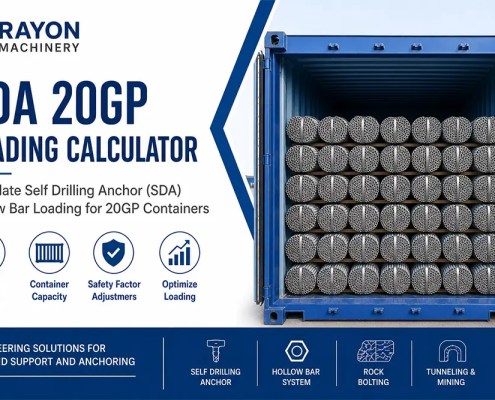 https://i0.wp.com/rayonsda.com/wp-content/uploads/2026/06/SDA-Container-Loading.webp?fit=1000%2C667&ssl=1
667
1000
RY
https://rayonsda.com/wp-content/uploads/2026/03/Rayon-Logo-300x138.png
RY2026-06-01 06:59:172026-09-03 07:32:10Self Drilling Anchor Container Loading Guide (20GP Calculation Method)
https://i0.wp.com/rayonsda.com/wp-content/uploads/2026/06/SDA-Container-Loading.webp?fit=1000%2C667&ssl=1
667
1000
RY
https://rayonsda.com/wp-content/uploads/2026/03/Rayon-Logo-300x138.png
RY2026-06-01 06:59:172026-09-03 07:32:10Self Drilling Anchor Container Loading Guide (20GP Calculation Method) https://i0.wp.com/rayonsda.com/wp-content/uploads/2026/05/Prestressed-Anchors.webp?fit=1000%2C800&ssl=1
800
1000
RY
https://rayonsda.com/wp-content/uploads/2026/03/Rayon-Logo-300x138.png
RY2026-05-21 01:34:102026-05-21 01:34:12Prestressed Anchors and Gravity Walls in Action
https://i0.wp.com/rayonsda.com/wp-content/uploads/2026/05/Prestressed-Anchors.webp?fit=1000%2C800&ssl=1
800
1000
RY
https://rayonsda.com/wp-content/uploads/2026/03/Rayon-Logo-300x138.png
RY2026-05-21 01:34:102026-05-21 01:34:12Prestressed Anchors and Gravity Walls in Action
